1. The Context of the Accrual Reform
The transition to a single accrual-based financial accounting system constitutes Reform 1.15 of the NRRP (National Recovery and Resilience Plan) and is associated with the European milestone M1C1-118. This reform is not merely a bureaucratic requirement or a change in formal reporting formats; rather, it introduces a profound paradigm shift aimed at establishing a transparent, standardized public reporting system strongly focused on the quality, reliability, and comparability of accounting information.
2. Key Milestones and Compliance Deadlines
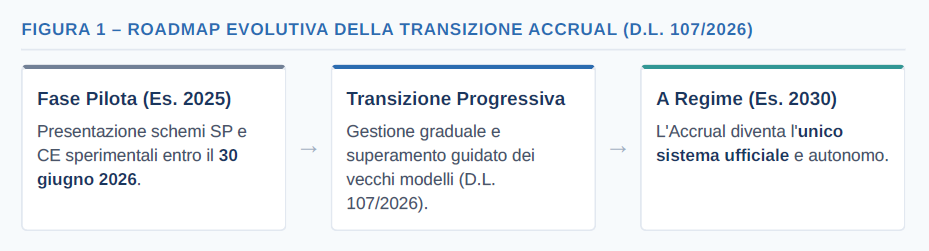
The original roadmap issued by the Ministry of Economy and Finance (MEF) divided the reform into two phases: a pilot phase focused on the Balance Sheet and Income Statement for the 2025 financial year, to be submitted by 30 June 2026, followed by a full implementation phase. This path has been reshaped by Decree-Law No. 107/2026, which structurally modifies the post-pilot transition. Acknowledging the inherent complexities involved in replacing the previous accounting models, the legislator has adopted a gradual approach by extending the final implementation deadline to 2030. Only from that financial year onward will Accrual accounting become the sole autonomous and official economic and patrimonial accounting system.
3. The Technical Pillars of the Reform: What Changes Operationally
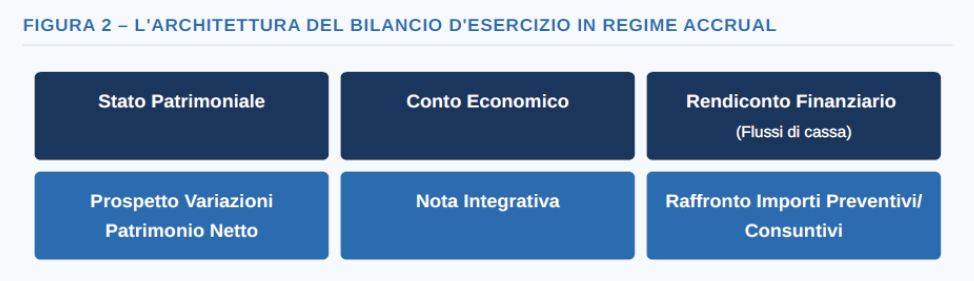
The new accounting framework is based on the Conceptual Framework (approved in 2022) and the ITAS (Italian Public Sector Accounting Standards), which are directly inspired by the international IPSAS and EPSAS standards. The annual financial statements now consist of six key documents: the Balance Sheet, the Income Statement, the Cash Flow Statement, the Statement of Changes in Equity, the Notes to the Financial Statements, and the Comparison between Budgeted and Actual Amounts.
From a strictly operational perspective, the reform eliminates the traditional concept of "collectability" typical of enhanced financial accounting, introducing independent valuation criteria that are detached from mere cash transactions or the automatic alignment with financial commitments and revenue assessments.
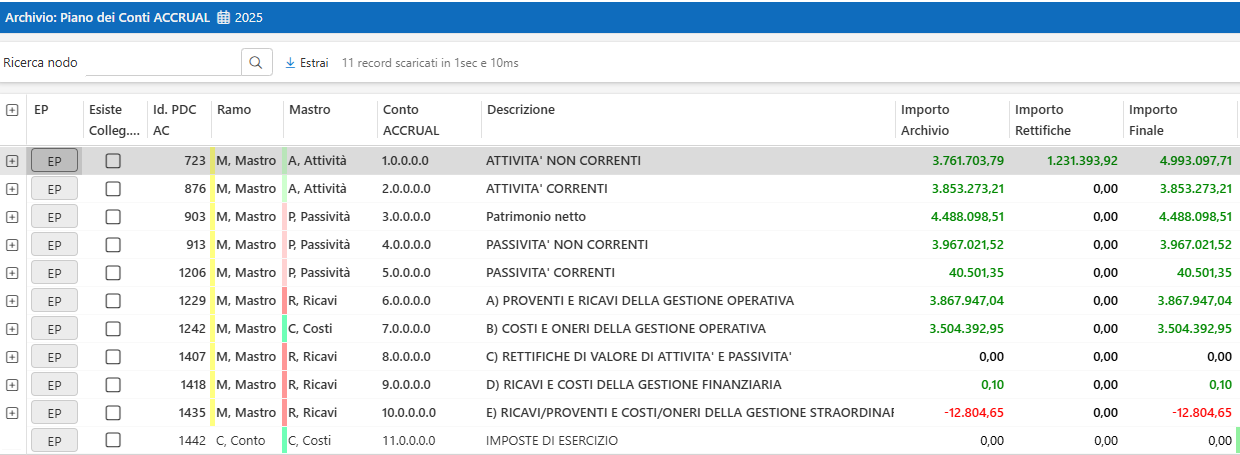
To understand the impact of this structural breakdown within information systems, the application's overview displays the hierarchy of ledgers and accounts according to the ministerial chart of accounts, where each entry is linked to a specific asset or economic macro-classification.
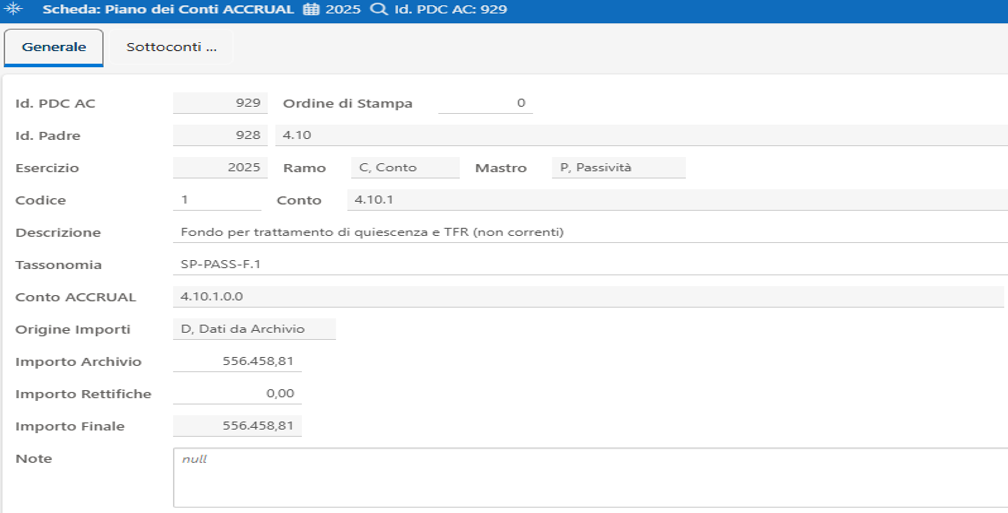
Examining a single accounting item in greater detail, the account master record allows users to manage the ministerial taxonomy and the origin of accounting flows (for example, expense funds and non-current liabilities), while isolating year-end adjustment entries.
4. Gesinf's Technological Response
The Accrual Module has now been officially released into production and is available to all entities using the GOV 2G and CRP platforms. The integration of this module provides a timely, consistent, and structured solution to support public entities in the transition to the new single accrual-based financial accounting system while ensuring administrative continuity. The software goes beyond merely fulfilling formal compliance requirements by offering a flexible architecture that is natively aligned with the NRRP milestones and the provisions issued by the Ministry of Economy and Finance (MEF).
Technical Specifications of the Accrual Module:
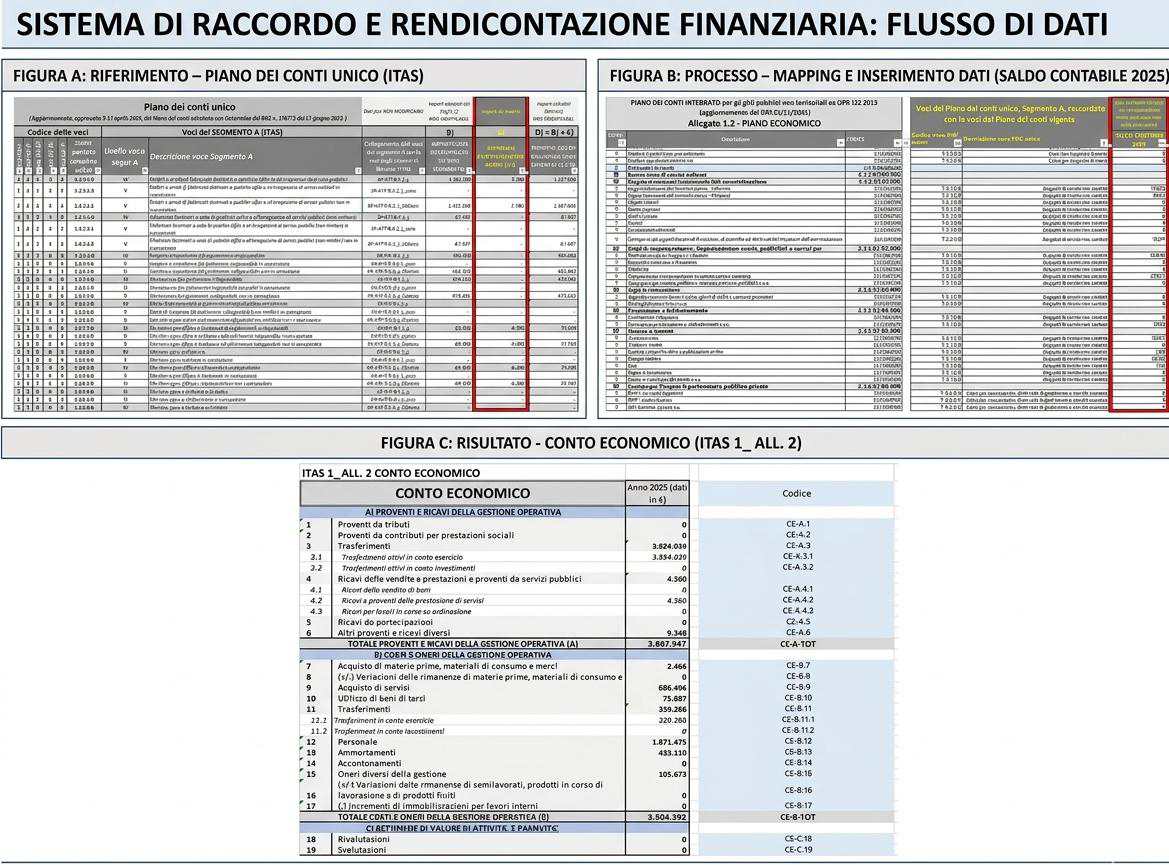
✓ Multidimensional Mapping and Automation: The module automates the reconciliation procedures between the current accrual accounting records and the new multidimensional ministerial models. The software processes the financial statements in Accrual format by exporting the reconciliation model required for the specific entity, linking it with the entity's internal accounting data and completing the accounting conversion process.
✓ Adjustment Entries and ITAS Standards Management: The software engine includes dedicated functionality for managing adjustment entries and year-end accounting adjustments, ensuring the correct application of the Italian Public Sector Accounting Standards (ITAS).
✓ Financial Statement Output in Compliance with MEF Requirements: At the reporting level, the system enables the extraction of the entity's financial statements in Excel format, faithfully reflecting the ministerial layout. The report provides a detailed presentation of the Opening Position, the impact resulting from ITAS Adjustments/Entries, and finally the Closing Financial and Economic Position.
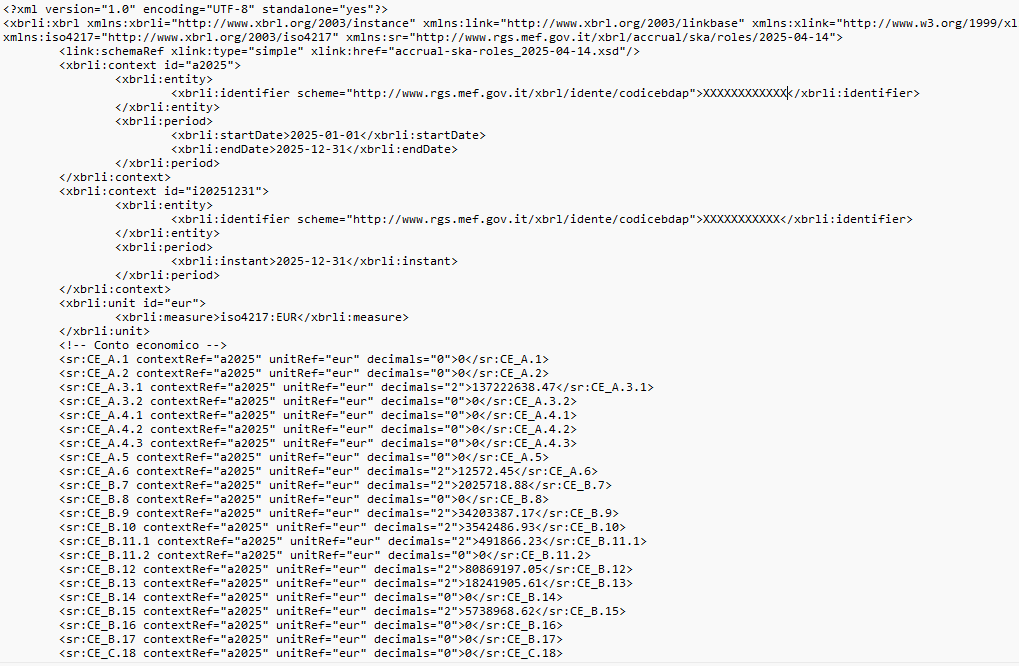
✓ Submission of the XBRL File to the MEF: The process concludes within the Accrual area through a batch processing function that automatically generates the XBRL file, ready for direct electronic submission to the systems of the State General Accounting Department (RGS), in accordance with the required standards and validation rules. The final output is therefore immediately available as the standardized and validated file required for electronic submission to the supervisory authorities.
✓ Submitting the XBRL file to the MEF: The process concludes in the Accrual section with a bulk processing system that automates the generation of the XBRL format file, ready for direct electronic transmission to the systems of the Department of the General Accounts of the State (RGS) in accordance with standard rules and validation guidelines. In fact, the final output ready for electronic submission directly translates into the standardized and validated format required by the audit bodies.